Skip to content
Mar de Oro
Nations of Aeon

A Power of Aeon

Volkharov

The Interior Empire. The Enduring State. The Nation That Has Survived What Others Cannot Imagine.

Volkharov is an interior empire defined by vyderzhka, the cultivated art of outlasting what breaks other nations, bound to the Oraclean Communion and expanding slowly overland across distances that would exhaust any other power.

Governance & Culture

At a glance

Political Order
Monarchy with a strong central authority vested in the royal family. The state maintains strict control over its territories, emphasizing military strength and national unity.
Religion
Predominantly follows the Oraclean Communion, with a focus on rituals, prophecy, and a structured clergy.
Capital

Zarovsk

Known for its imposing architecture and heavy fortifications, Zarovsk is the military and administrative center of Volkharov. Broad avenues and grand palaces reflect the power and prestige of the royal family.
Language

Volkharian

Volkharian is known for its robust and commanding tone. It is the official language of state affairs and military communication, and is deeply tied to the cultural identity of Volkharov.

History and Expansion

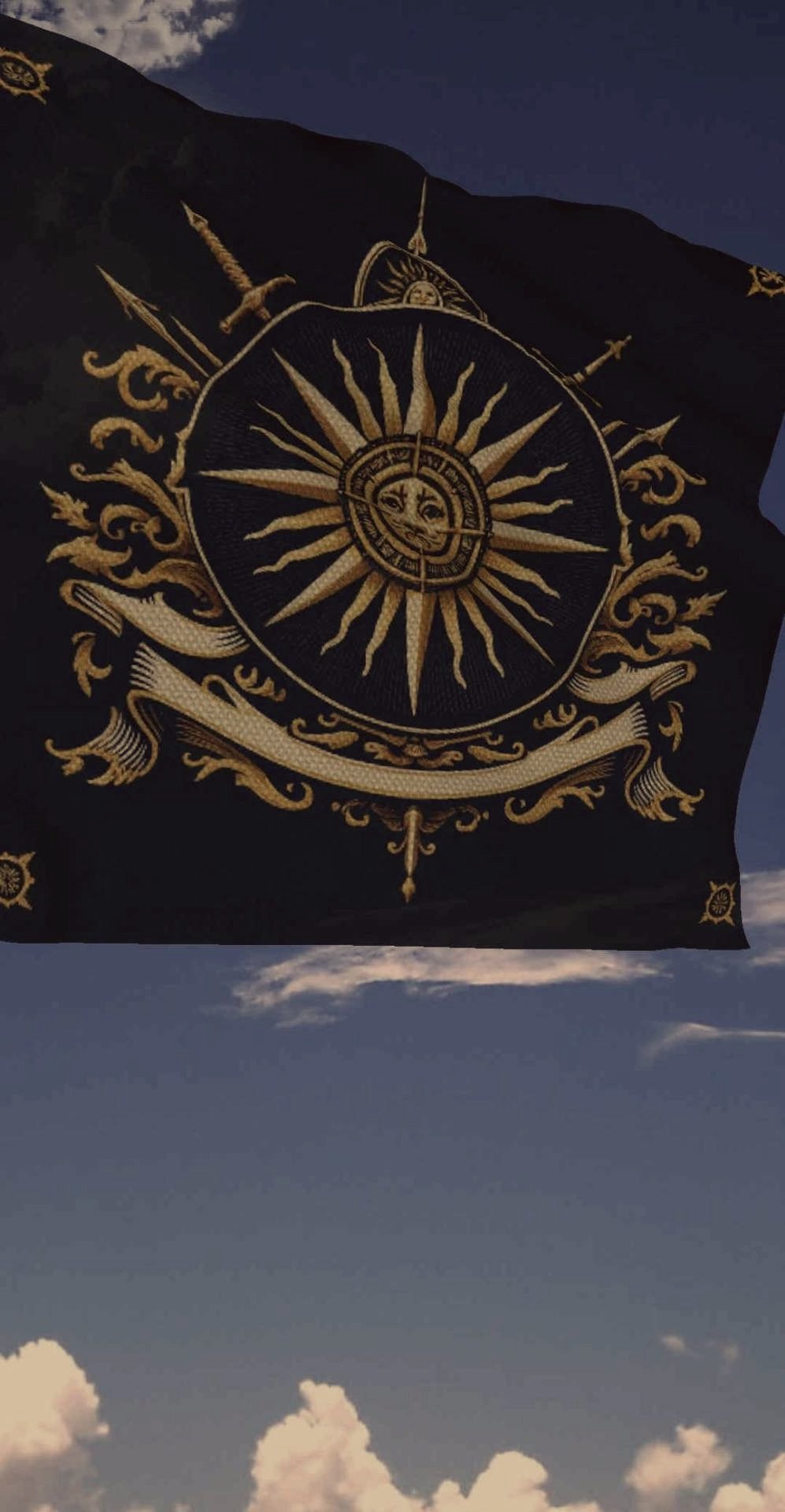
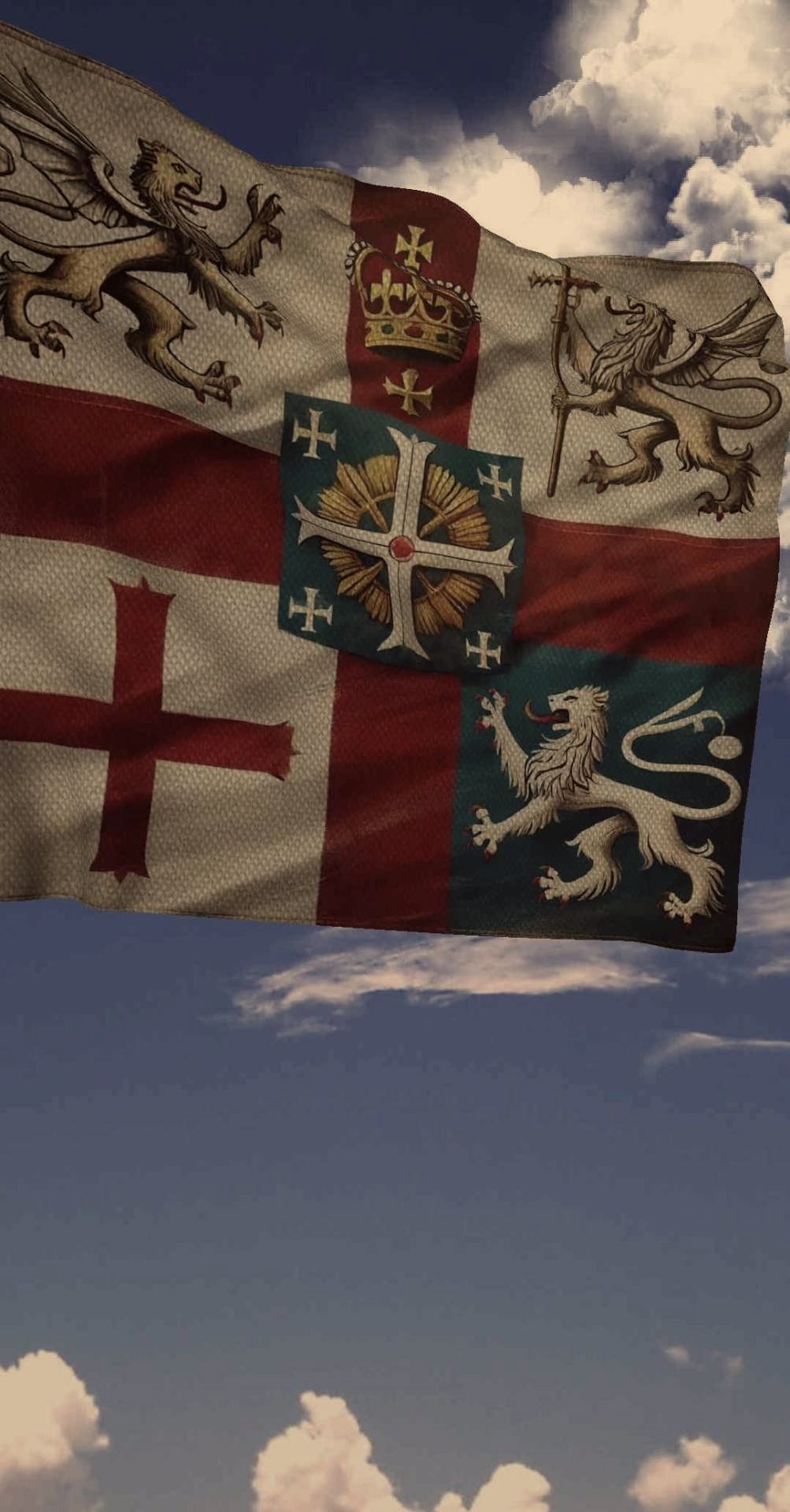
Volkharov's origins are ancient and disputed by everyone, including the Volkharovi. What is clear is that the realm's current form was established roughly three centuries ago by a ruler known in the national historiography as the Great Consolidator, the First Sovereign Ilya, who welded together a coalition of regional polities sharing cultural, linguistic, and religious ties into a single administered entity with a central court, a common legal code, and a unified church structure. The Oraclean church was not merely present at this founding; it was constitutive. The legitimation of Ilya's authority came through the Archpatriarch of the Oraclean Communion, and the forms of that legitimation, the great anointing, the liturgical proclamation, and the conciliar endorsement, were not symbolic gestures. They were the mechanism by which the new realm was made. The relationship between the Volkharovi state and the Oraclean Communion that began with Ilya's anointing has not fundamentally changed. The church is a state church in all but the formal letter of its constitution; the sovereign appoints the Archpatriarch through a process of conciliar election whose outcome is reliably shaped by court influence; the church blesses the sovereign's military campaigns, administers significant portions of the agricultural interior through monastic networks, and provides the most reliable communication infrastructure in a realm too large for any purely secular messaging system to manage. The Archpatriarch's authority is real. So is the sovereign's. The two institutions have achieved, over three centuries, a mode of co-governance that neither party wishes to clarify too precisely, because clarity would require one of them to yield a point they have no intention of yielding.
The Oraclean Tradition in Volkharov

The Oraclean Communion is the most ancient of the three major confessional traditions, and in Volkharov it is practiced with an intensity and institutional seriousness that distinguishes it from Oraclean communities elsewhere. The liturgy is elaborate, lengthy, and conducted in a liturgical language distinct from the vernacular, creating a quality of sacramental weight that Oraclean theologians describe as the membrane of the eternal, the sense that the liturgical space is not metaphorically but actually adjacent to the realm of sacred order. The great Volkharovi cathedral in the capital, the Uspensky Sobor, is the largest building in the realm and the site of every significant act of state. Coronations, funerals, the investiture of military commanders, the solemn reception of ambassadors, all take place within it, under the accumulated weight of centuries of sanctified governance. The Oraclean tradition emphasizes communal discernment, the idea that the Fortera is not primarily revealed to individuals but to communities constituted properly through sacramental life. This distinguishes it from both the Solarian tradition (which centers authority in a hierarchical institution) and the Luminary tradition (which emphasizes individual conscience). In Volkharov, communal discernment means the conciliar processes by which the church makes significant decisions, the village assembly structures through which local governance is organized, and the deep cultural instinct that important decisions should be made together and should have the weight of the community behind them. This instinct coexists, not without tension, with the hierarchical authority of both the state and the church. The Volkharovi have lived with this tension for centuries. They regard it as a normal condition of serious communal life.

Expansion and Overland Reach

Volkharov does not expand the way other powers expand. It does not primarily seek to establish harbor stations and commercial leverage points; it does not primarily seek to plant colonial flags on distant shores. Its expansion moves overland, across the enormous interior of the continent that lies to its east and south, territories that other powers have not penetrated in any systematic way because they lack the organizational capacity to maintain coherent structure across such distances, or because the distances themselves are simply beyond what any plausible supply chain can sustain. Volkharov sustains it. The monastic networks, the tributary arrangements with interior peoples, the systematic establishment of fortified way stations that become, in time, small towns, and then larger ones, and this process moves slowly and very rarely reverses. A polity that has submitted to Volkharovi tributary arrangements has, in most historical cases, remained in that status. Not always willingly. Not always comfortably. But with a permanence that the Volkharovi regard as natural and their subjects often regard as inevitable. In Mar de Oro, Volkharov appears rarely and, when it appears, consequentially. Its presence is not commercial or administrative but purposeful in a way that is difficult to fit into the frameworks other powers use. A Volkharovi survey vessel in the Golden Sea is not primarily interested in commercial advantage or territorial claim. It is interested in the geography, the strategic disposition of other powers, and, visibly and undisguisedly, the spiritual state of Oraclean communities that may exist in the colonial diaspora. A Volkharovi religious mission to a colonial territory is a diplomatic act whether the missionaries acknowledge it or not. The very fact of their presence, bearing the rite, administering the sacraments, maintaining the liturgical forms with scrupulous precision in conditions that would have excused a more casual observance, is itself a political statement about what Volkharov considers permanent.

What a Volkharovi Carries

The character formed in Volkharovi culture carries vyderzhka, not as a philosophy but as a bodily fact, an ingrained disposition toward persistence that other national characters sometimes experience as impassivity but which is more accurately described as the reserve of someone who is not yet at the limit of what they can endure, and who knows from experience that the limit is further out than most people think. They have been raised in a tradition that does not separate the communal from the individual in the way that Solarian or Luminary formation tends to; what they are is substantially constituted by who they are with, and they carry their communities with them in a way that is not sentimental but ontological. They carry the Oraclean rite in their bones, not necessarily as active practitioners, but as people for whom the forms of liturgical life have been present since infancy, shaping the rhythms of the year and the marking of significant moments. Even a Volkharovi character who has lapsed in formal observance carries a residual comfort with liturgical time, communal ritual, and the idea that some things require proper form to be properly done. They have a specific relationship to authority: they understand it from the inside, as something that functions within communities rather than being imposed on them from outside, and they are correspondingly suspicious of authority that does not demonstrate genuine embeddedness in the community it claims to govern.

A concrete detail

One concrete detail: in the Volkharovi military tradition, every unit of any significant size carries with it a portable icon, a small painted panel often depicting the Intercessor or one of the great saints of the Oraclean calendar, which is the unit's sacred object and travels with it on every campaign. The icon is not merely a devotional item; it is, in the Oraclean understanding, a point of contact between the unit and the community it serves and the greater order in which both participate. Before a battle, the icon is brought forward and venerated. After a battle, whatever the outcome, it is venerated again. When a unit is destroyed, its icon, if recovered, is carried to the nearest monastery and installed in the chapel. The monks pray for the dead from that unit on the anniversary of their destruction, for as long as the monastery stands. This practice has been continuous in some Volkharovi monastic houses for two hundred years. In a few, for longer.